19,800 ADT
Ryan Rd traffic
MDOT 2023
26,400 ADT
13 Mile Rd traffic
MDOT 2023
98,200
Population (3-mile radius)
ACS 2023
39,800
Households (3-mile)
ACS 2023
Walking into a shopping center for lease near me for the first time, the natural instinct is to focus on the rent per square foot. That number matters, but it is not what determines whether your business succeeds in the space. The shopping center itself does.
Here is the checklist that small business owners use when they are picking a shopping center for rent that will actually deliver customers.
1. Co-tenancy, who else is in the strip?
The other tenants are pulling traffic past your door every day. Ask yourself:
- Does the existing tenant mix bring foot traffic that overlaps with your target customer?
- Are there anchor businesses that draw daily visits, a grocer, pharmacy, popular restaurant, or established service business?
- Is there a complementary tenant you could be next to? A salon next to a nail studio. A bakery next to a coffee shop. A specialty grocer next to a halal butcher.
- Are there any direct competitors already there? Two pizza shops in the same plaza usually means one closes.
The strongest shopping centers for lease have a deliberate tenant mix, a leasing-savvy owner curates rather than just filling vacancies.
2. Traffic patterns, ADT vs. the right kind of traffic
Average daily traffic counts (ADT) are easy to look up but easy to misread.
A 30,000 ADT freeway-access road sounds like a goldmine. But if drivers are blowing past at 50 mph trying to get to the highway, they are not stopping for your shop. Compare against a 15,000 ADT street with a 35 mph speed limit, a traffic light at the corner of the center, and a left-turn lane, that lower number actually delivers more turn-ins.
Ask the landlord for the corridor's ADT and the speed limit. Then go visit the property at the same time of day you would expect your peak business hours to confirm the foot traffic matches the car count.
3. Parking, count the spaces, count the time
Parking ratios vary by tenant type but a healthy retail center has 4-5 parking spaces per 1,000 SF of leasable area. A 20,000 SF center should have 80-100 spaces.
Go visit at your peak target hours. If the lot is already full because of the existing tenants, your customers will fight for spaces or skip you. If the lot is half-empty even at peak hours, that might be a signal the existing tenants are not drawing.
4. Signage rights and visibility
A great location with no signage rights is a bad location.
- Does the shopping center have a pylon sign or monument sign on the road, and do you get a panel on it?
- What are the storefront signage rules, can you put your logo above your door at the size that fits your brand?
- Are there restrictions on window signage, sandwich boards, or LED signs?
These should be spelled out in the lease, not handshake-promised.
5. Lease term flexibility
A 5-year lease at a $14/SF retail rate is a roughly $112,000 commitment (assuming a 1,600 SF unit). That is real money. Ask:
- Is there a kick-out clause if a major co-tenant leaves (an anchor goes dark)?
- Is there a sales kick-out if the unit underperforms a stated threshold in year one?
- What is the renewal option, fixed bumps or fair-market reset?
- Is there a personal guarantee, and if so, can it burn off after year two?
6. The landlord, who you actually work with for 5+ years
You will deal with the landlord for parking lot repairs, HVAC issues, signage approvals, snow removal complaints, and lease renewals. A direct-with-owner relationship is dramatically different from working with a property management arm of a national REIT.
Small owner-operators tend to answer the phone, make decisions in one conversation, and care about the long-term reputation of their property. That can be worth a dollar or two per square foot to a tenant.
Our shopping center on Ryan Road
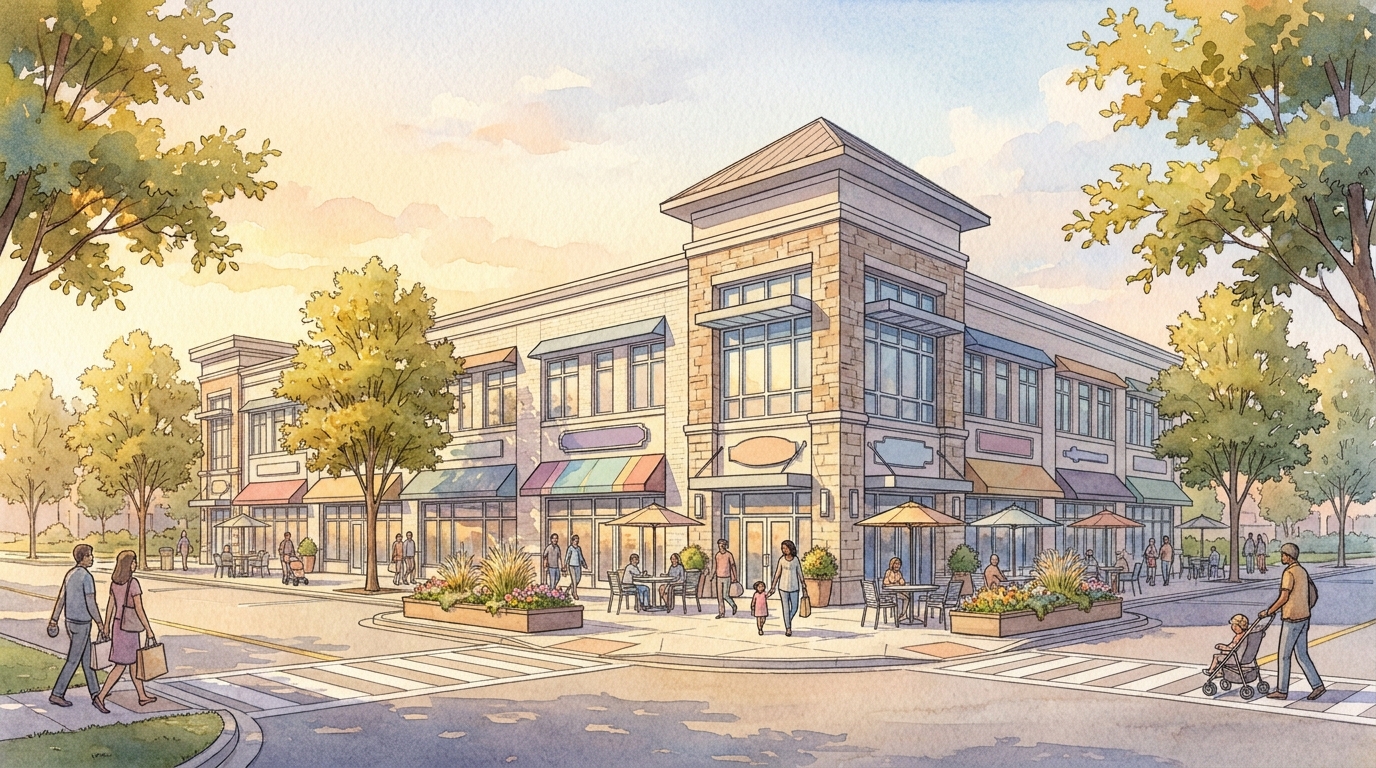
If you are looking for a shopping center for rent at 13 Mile and Ryan in Warren MI, our property at 30830 Ryan Rd has 1,600 SF retail spaces (combinable to 3,200 SF) in an active strip with established co-tenants and direct frontage on a 19,800 ADT corridor.
We manage the building directly, you talk to the owner, not a property management call center. Walk the space or call (248) 939-9017 to discuss whether it fits your business.
Informational only. This article reflects MT Commercial Property Services' analysis of the local retail leasing market and does not constitute legal, financial, or real estate advice. Rates, traffic counts, and availability are current as of the date of publication and subject to change. Consult a commercial real estate broker, attorney, or accountant before making leasing decisions.
| Factor | What to Verify | Weight |
|---|---|---|
| Traffic count (ADT) | Minimum 15,000 on primary frontage road | High |
| Anchor co-tenants | National grocery, big-box, or pharmacy on-site | High |
| Parking ratio | ≥4 spaces per 1,000 SF GLA | High |
| Signage visibility | Pylon or monument sign with tenant slot | Medium |
| Lease type | NNN vs gross — calculate true monthly cost | High |
| Co-tenancy clause | Right to terminate or rent reduction if anchor leaves | Medium |
| 3-mile demographics | Population density + household income matches target | High |
Source: MT Commercial leasing checklist
"A shopping center is a co-tenancy contract disguised as real estate. You're not just renting walls — you're renting the foot traffic your neighbors generate. Pick neighbors who pull the customers you want."
— MT Commercial Property Services
Frequently Asked Questions
How important is co-tenancy when picking a shopping center?
Co-tenancy matters more than rent rate for most small business operators. The right neighbors market for you by drawing your target customer to the strip. Wrong neighbors can starve a business of foot traffic regardless of how cheap the rent is.
What ADT should I look for in a retail shopping center?
For local-serving retail, 15,000-25,000 ADT on a corridor with traffic-calmed speeds (35-45 mph) and at least one signalized intersection nearby delivers good turn-in rates. Higher ADT freeways with 50+ mph traffic often look great on paper but drivers do not stop.
What lease term should a small business sign?
3 years with two 2-year options is a common sweet spot for first-time retail tenants. You commit to enough time to build the business, but if it does not work you exit at year 3 rather than year 5.
What is a co-tenancy clause?
A co-tenancy clause lets the tenant reduce rent or terminate the lease if a major anchor tenant leaves or if total occupancy in the center drops below a certain threshold. Important for tenants whose business depends on the foot traffic the anchor draws.
What is a kick-out clause?
A kick-out clause lets the tenant exit the lease early if sales fall below a stated threshold by a certain point in the term, often year 2. Protects you from being locked into a bad location for the full 5 years.
How are CAM charges calculated?
Common Area Maintenance (CAM) charges cover snow removal, lot striping, lighting, landscaping, security, and shared facilities. Calculated as a pro-rata share of the centers total CAM budget based on your leased square footage divided by the centers total square footage. Ask for the prior year actual reconciliation, not just the budgeted estimate.
What is percentage rent?
Some retail leases charge a base rent plus a percentage of gross sales above a certain breakpoint. Common in malls and lifestyle centers, rare in strip centers. Watch for this in upscale retail locations.
How important are signage rights in a shopping center?
Critical. A great location with weak signage is a bad location. Confirm in writing: pylon sign panel allocation, storefront sign size and lighting allowance, window signage rules, and any sandwich board or LED sign restrictions.
What happens if a neighboring tenant closes?
It depends on the lease. Without a co-tenancy clause, you continue paying full rent regardless of who closes. With one, you may get rent relief or an exit right if the closure affects an anchor or drops total occupancy below the threshold.
How many parking spaces should a shopping center have per square foot of retail?
4 to 5 parking spaces per 1,000 square feet of leasable area is the healthy range for retail. Restaurants and high-traffic uses need higher ratios (8-12 per 1,000 SF). Verify by visiting the lot at your target peak hours.