The City Is Spending Money. Smart Tenants Are Paying Attention.
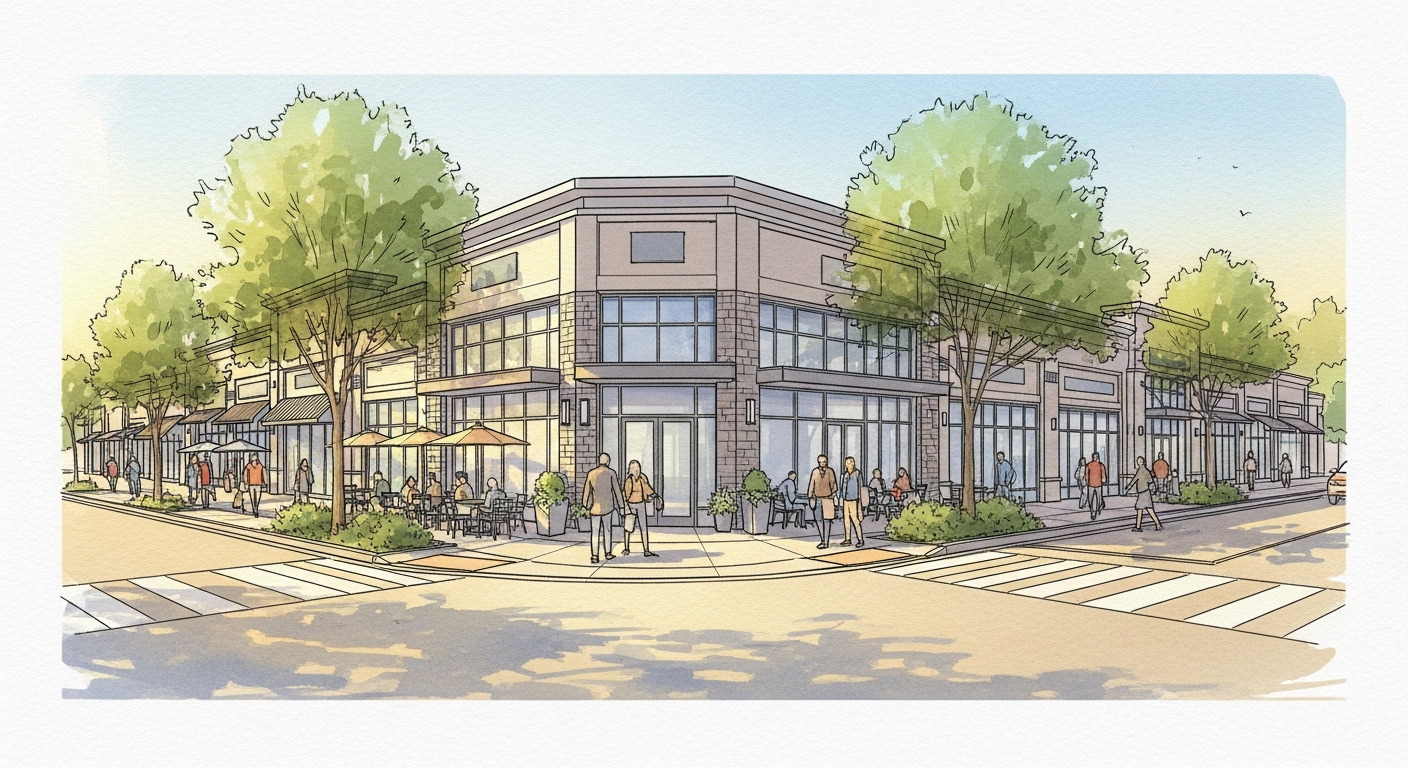
Sterling Heights doesn't make a lot of noise. It's not Troy. It's not Birmingham. But the city's planning commission is quietly doing something those flashier suburbs haven't managed: committing real resources to modernizing its retail corridors, with a focus on updated infrastructure, improved parking, and plaza-level revitalization designed to bring shoppers back.
In a May 2025 report, WXYZ Channel 7 covered the city's initiative to redevelop and revitalize its strip malls and shopping plazas, a signal that Sterling Heights isn't content to let its commercial strips age out. That kind of municipal investment matters for retail tenants, not just property owners. When a city puts its weight behind commercial corridors, foot traffic follows.
The biggest example: Lakeside Mall closed in July 2024 and is now slated for a $1 billion redevelopment into Lakeside City Center, a mixed-use project with over 2,800 residential units and 150,000 square feet of new retail space. That kind of investment reshapes an entire commercial corridor.
If you are searching for retail space in Sterling Heights, MI right now, you are searching at the right moment. Before the upgrades are complete. Before the rates reflect what this market is becoming.
What the Revitalization Actually Means for Your Business
City-led plaza modernization isn't just cosmetic. When Sterling Heights invests in its commercial corridors, the downstream effects are real:
- Upgraded parking lots and lighting make customers more likely to stop, not just drive past
- Improved storefronts and signage visibility raise the profile of every tenant in the plaza
- Infrastructure investment signals to other businesses that the area is worth betting on, which means more foot traffic from anchor tenants and neighboring shops
- City-backed revitalization typically attracts new residential development nearby, expanding your customer base
Sterling Heights already has the population density to support strong retail. With nearly 135,000 residents, it's one of the largest cities in Michigan. The revitalization initiative is the city's acknowledgment that its retail infrastructure needs to match the demand that's already there.
~135,000 residents make Sterling Heights one of Michigan's largest cities, and one of its most underserved retail markets relative to population size.
The Traffic Is Already There
Schoenherr Road. Van Dyke Avenue. Hall Road. These aren't quiet side streets. Sterling Heights sits at the intersection of some of Macomb County's highest-traffic corridors, and the shopping plazas along these routes benefit from consistent daily exposure to commuters, families, and residents running errands.
That visibility is the first thing most retail operators ask about when they're evaluating a space. Sterling Heights delivers it without the premium price tag that comes with Troy's Big Beaver corridor or Birmingham's downtown core.
The best time to get into a revitalizing market is before everyone else figures out it's revitalizing.
Salon owners, restaurant operators, specialty retailers, and health and wellness businesses all depend on passing traffic to drive walk-ins and build awareness. A well-located storefront on a Sterling Heights corridor gives you that exposure at a lease rate that leaves room to actually run your business.
What to Look for When Evaluating a Sterling Heights Plaza Space
Not every plaza is equal, even within the same city. Here's a practical framework for evaluating whether a specific retail space in Sterling Heights is the right fit for your business:
- Anchor tenant proximity. Is there a grocery store, pharmacy, or national brand nearby? Anchor tenants drive consistent foot traffic that smaller retailers and restaurants benefit from directly.
- Parking ratio. For a restaurant or salon, you need enough parking that customers don't give up and leave. Ask for the parking count relative to total square footage in the plaza.
- Road visibility and signage. Can drivers see your storefront from the road at 40 mph? Signage rights vary by plaza, confirm what's permitted before you sign.
- Co-tenancy mix. A plaza full of complementary businesses (a gym next to a smoothie bar, a salon next to a boutique) generates cross-traffic. A plaza with too many vacancies can signal underlying problems.
- Lease flexibility. First-time tenants especially should ask about lease term length, renewal options, and what happens if the plaza ownership changes during your term.
The Affordability Advantage Is Real, But It Won't Last Forever
Compared to lease rates in Detroit's Midtown or the Troy/Birmingham corridor, Sterling Heights retail space is genuinely more affordable. That gap is partly a function of perception, Sterling Heights hasn't been marketed the way those markets have. But perception shifts when a city starts visibly investing in its commercial infrastructure.
Revitalization initiatives have a track record of compressing that affordability gap. When the plazas look better, when parking improves, when new businesses move in, landlords adjust their rates to reflect the upgraded product. The tenants who locked in before that adjustment happened are the ones who built sustainable businesses on manageable overhead.
That's not speculation. It's a pattern that has played out in revitalizing urban markets across Metro Detroit, where rising visibility and infrastructure investment have historically been followed by upward pressure on lease rates. Sterling Heights is earlier in that curve, which is exactly why it's worth acting on now.
The New Economy Angle
Sterling Heights has a manufacturing and industrial base that employs tens of thousands of workers across the region. That employment base is growing, particularly with defense and advanced manufacturing investment in the area. According to the City of Sterling Heights, Warren and Sterling Heights together form one of the nation's leading defense corridors, anchored by TACOM and the Ground Vehicle Systems Center (GVSC). According to Crain's Detroit Business, more than $65 billion in defense contracts have been awarded to Macomb County businesses over the past 25 years, with $3.2 billion in 2024 alone. The defense corridor employs approximately 47,000 people directly and supports another 71,000 local jobs. Those workers need places to eat lunch, get haircuts, pick up specialty goods, and access health and wellness services near where they work.
That's your customer. Not abstract "foot traffic", actual employed residents with disposable income who live and work within a few miles of your storefront.
Restaurant operators in particular should be looking at the lunch and dinner opportunity that comes with a large, stable employment population. A well-placed restaurant in a Sterling Heights plaza can build a loyal weekday base before the weekend crowd even shows up.
Spaces Are Available Now
MT Commercial Property Services has retail and storefront spaces available in Sterling Heights and across the broader Macomb County market, including active vacancies in Warren and Macomb Township. Spaces range from 1,000 to 3,000 square feet, sized for independent retailers, restaurant operators, salons, and health and wellness businesses that need a professional, visible storefront without the overhead of a large commercial footprint.
These aren't speculative listings. They're ready-to-tour spaces in locations with the traffic, parking, and visibility that make retail businesses work.
Call or email MT Commercial Property Services to schedule a tour and see what's currently available in Sterling Heights and the surrounding area.
Frequently Asked Questions
What types of retail space are available in Sterling Heights, MI?
MT Commercial Property Services offers storefront and retail spaces ranging from 1,000 to 3,000 square feet in Sterling Heights and surrounding Macomb County communities. These spaces are suited for restaurants, salons, specialty retailers, and health and wellness businesses. Contact MT Commercial directly to get current availability and schedule a tour.
Why is Sterling Heights a good location for a retail business?
Sterling Heights has a population of nearly 135,000 residents and sits along high-traffic corridors like Van Dyke Avenue and Schoenherr Road. The city is actively revitalizing its shopping plazas, and lease rates remain significantly more affordable than comparable spaces in Troy or Birmingham. That combination of traffic, density, and affordability is rare in Metro Detroit.
How does Sterling Heights retail space compare in cost to Troy or Detroit?
Sterling Heights retail lease rates are generally lower than those in Troy's Big Beaver corridor or Detroit's Midtown district. As the city's plaza revitalization initiative takes hold and visibility improves, that gap is likely to narrow. Tenants who secure space now are positioned to benefit from the upside without paying premium rates.
What should I look for when evaluating a retail space in a Sterling Heights shopping plaza?
Key factors include anchor tenant proximity, parking availability, road visibility and signage rights, the mix of neighboring businesses, and lease flexibility. A space with strong anchor traffic, clear sightlines from the road, and a complementary co-tenancy mix will outperform a cheaper space that lacks those fundamentals.
How do I find out what retail spaces MT Commercial Property Services has available in Sterling Heights?
The best way is to call or email MT Commercial Property Services directly to ask about current vacancies and schedule an in-person tour. Available spaces move, and a direct conversation gives you the most up-to-date picture of what's on the market.